
If your CPA firm is evaluating a managed service provider for IT-as-a-Service, security is usually the headline. But it is not the full story.
For firms handling client financial data, tax documents and sensitive client communications, what matters more is how well that provider protects that data across the CIA triad: confidentiality, integrity and availability.
Many firms default to asking for ISO 27001 certification, a globally recognized standard for building and maintaining an information security management system. It is a strong framework and a useful signal. ISO 27001 also includes requirements for ongoing monitoring and internal audits, but it is still structured around how a security program is designed and maintained.
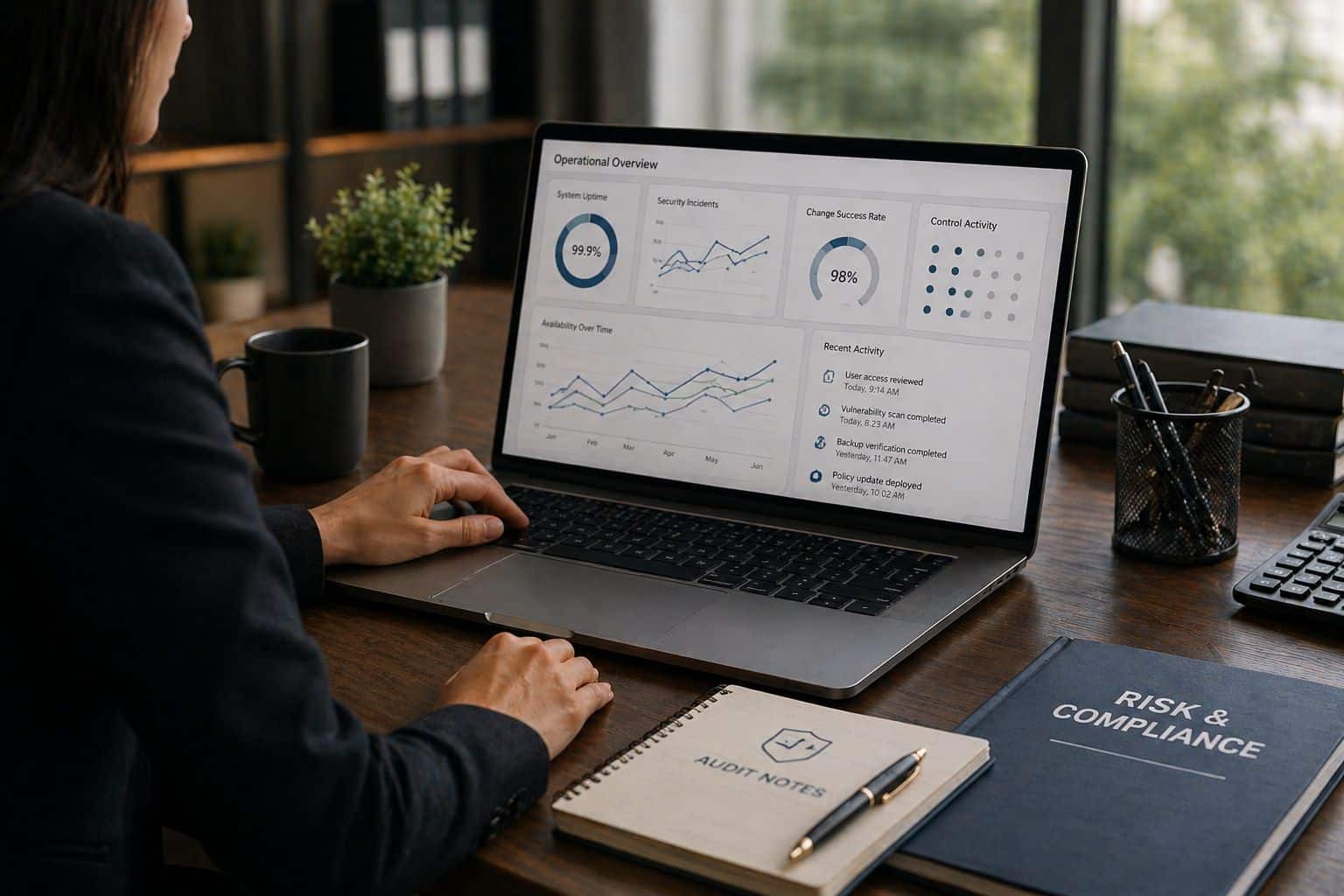
In a U.S.-based, cloud-first environment, SOC 2 Type II offers a different lens. Instead of focusing primarily on how controls are defined, it evaluates how they perform over time.
SOC 2 reports are based on the American Institute of Certified Public Accountants (AICPA) Trust Services Criteria, which define how organizations manage security, availability and confidentiality in practice.
For CPA firms, that distinction matters. You are not just evaluating whether controls exist. You are evaluating whether they hold up under real audit and client expectations.
Confidentiality: Defined vs. Enforced
ISO 27001 is designed to ensure organizations build a structured security program. Policies are documented, risks are assessed and controls are defined.
SOC 2 Type II shifts the focus from design to execution.
In an AWS-hosted ITaaS environment, that means looking beyond whether access controls exist and asking whether they are consistently enforced over time. Are users restricted to least privilege? Is multi-factor authentication required across the board? Are access patterns monitored and flagged when something looks off?
In cloud environments, these controls are often aligned with established frameworks like the NIST Cybersecurity Framework, which outlines best practices for access control and risk management.
SOC 2 Type II answers these questions with evidence collected over a defined audit period, not a point-in-time review. For firms handling financial data, that distinction is not academic. It is the difference between a system that should protect your data and one that demonstrably does.
Integrity: Quiet, but Critical
Integrity rarely gets top billing in security conversations, but it should. If your systems can be altered without detection, the downstream impact is significant.
ISO 27001 addresses this through change management and control frameworks, ensuring the right processes are in place to prevent unauthorized modification.
SOC 2 Type II goes further by validating that those processes are followed under real operating conditions. Auditors are not just reviewing documentation. They are testing whether changes are tracked, whether logs are reviewed and whether configuration and patching practices are consistently applied.
The outcome is straightforward. You gain greater confidence that the data your team relies on remains accurate and trustworthy, even as systems evolve.
Availability: Where the Difference Shows Up in Practice
Availability is where the gap between ISO 27001 and SOC 2 Type II becomes the most tangible, especially in cloud-hosted environments. ISO 27001 requires organizations to define business continuity and disaster recovery plans, which are a critical part of any security program. But those requirements focus on whether plans exist and are documented, not whether they consistently perform under real-world conditions.
SOC 2 Type II takes a more operational view. Instead of stopping at documentation, it evaluates how systems actually perform over time, including uptime, incident response and recovery outcomes across the audit period.
In AWS-based environments, responsibility is shared. The cloud provider delivers the underlying infrastructure, while the MSP is responsible for how services are configured, monitored and maintained on top of it.
Availability, therefore, is not just an architectural concept. It has to be demonstrated through redundancy, monitoring and tested recovery processes, all of which align closely with guidance from the AWS Well-Architected Framework around reliability and operational excellence.
For firms relying on platforms like Amazon WorkSpaces, this translates into a more consistent day-to-day experience:
- Users can access systems without interruption during peak periods
- Issues are detected and addressed before they escalate
- Recovery from incidents is faster and more predictable
The difference is simple. ISO 27001 helps ensure you have a plan for availability. SOC 2 Type II helps evaluate whether that plan works in practice.
Why This Matters for CPA Firms
If your firm is responsible for safeguarding financial data, your MSP becomes part of your audit scope and directly impacts your firm’s risk exposure. ISO 27001 provides confidence that a provider has built a structured security program. SOC 2 Type II provides a different type of assurance. It shows that controls operate over time, which aligns more closely with how auditors evaluate risk and control performance in practice.
Not all SOC 2 reports are equal. The scope of services, control coverage and audit rigor all influence how much assurance the report actually provides.
According to IBM’s Cost of a Data Breach Report, the average breach cost continues to rise, reinforcing the need for controls that are not just defined but consistently enforced. As firms continue moving toward cloud-first models, that distinction becomes more important. You are not just evaluating policies. You are evaluating performance.
The Bottom Line
When you step back, the comparison is straightforward. ISO 27001 tells you a provider has built the right foundation. SOC 2 Type II shows how that foundation performs under real operating conditions.
For MSP-delivered ITaaS, that means confidentiality is enforced, integrity is monitored and availability is measured based on actual performance, not assumptions. If your provider has a SOC 2 Type II report, you are not missing ISO 27001. You are gaining visibility into how the controls behind confidentiality, integrity and availability function in practice.
Kshitij Kathuria leads security, compliance and risk management for Netgain and helps clients strengthen their security posture across cloud and managed environments, drawing on more than 20 years of experience in healthcare and financial services. Learn more about Kshitij.