
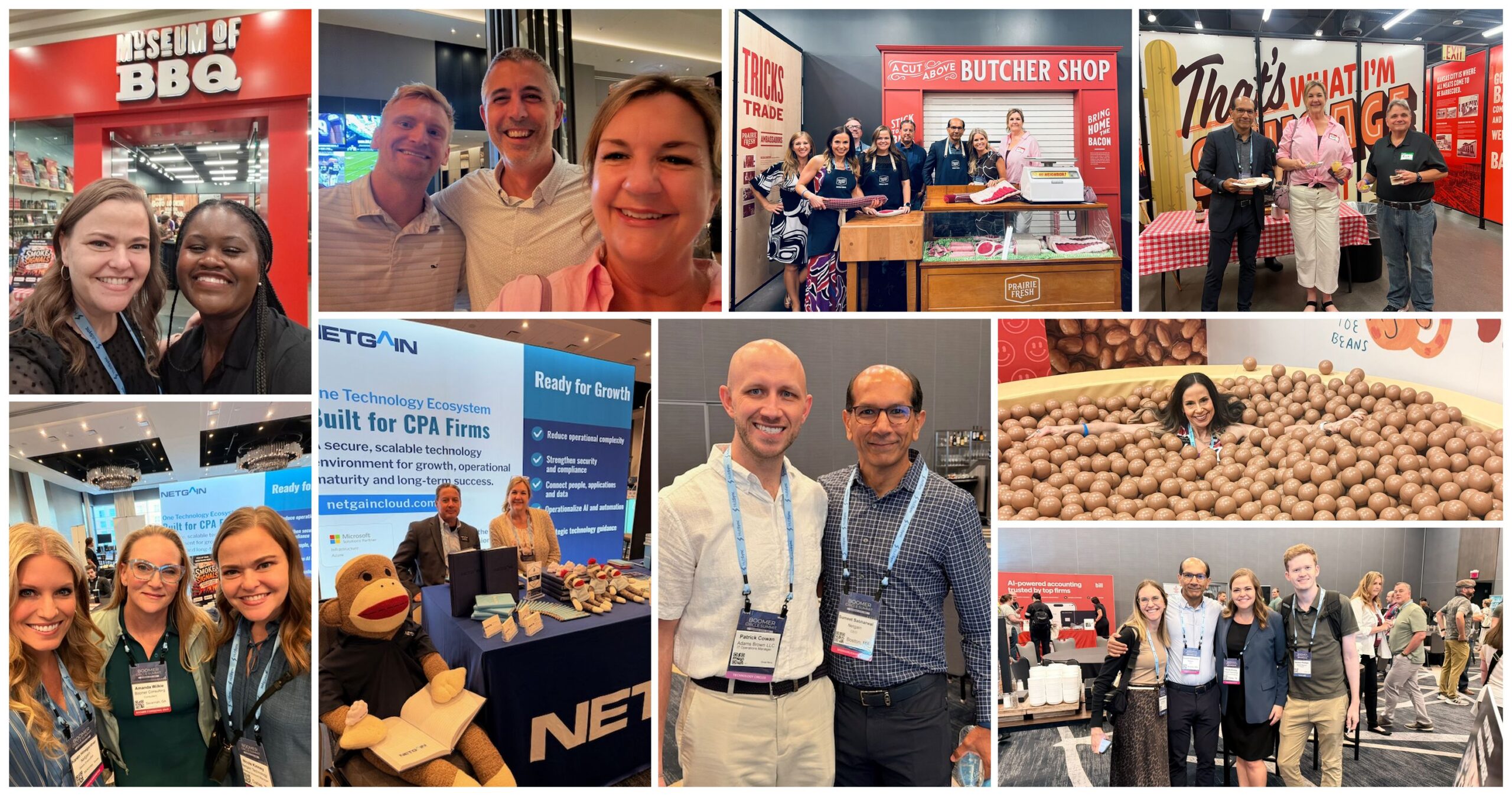
Kansas City Sets the Stage
The Netgain team traveled to the 2026 Boomer Circle Summit in Kansas City (Aug. 16 to 19) expecting good barbecue and better conversations. We got both, along with five themes we can’t stop thinking about. The shift from last year’s conversations was hard to miss. Where 2025’s sessions largely asked whether AI mattered, this year’s asked what to do with it now that most firms are already using it in some form. It also meant nearly every session found its way back to AI eventually.
Netgain in Action
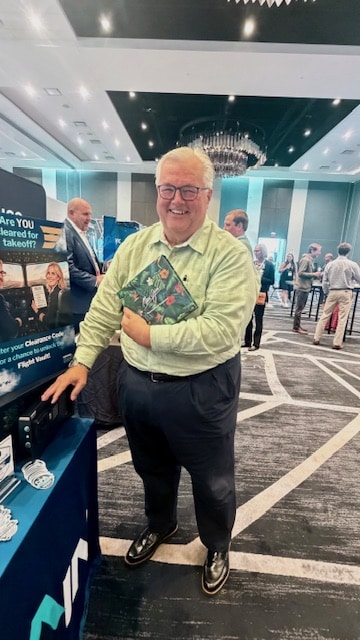
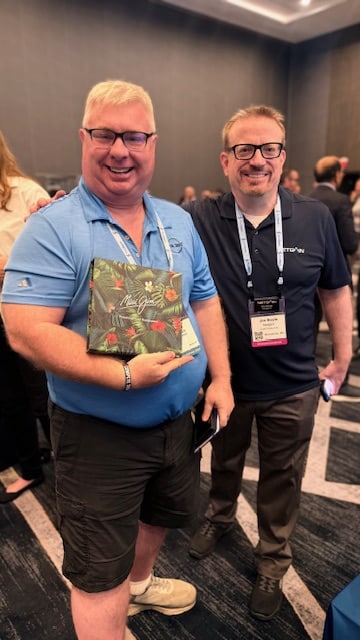
We brought back the lockbox by popular demand this year. Attendees got a random four-digit clearance code by email ahead of the Summit, then tried their luck at the booth. The right code unlocked a Maui Jim sunglasses prize. Everyone else walked away with swag: sock monkeys, notebooks, stickers, mugs and more. The fan favorites remain the sock monkeys (exciting to some, mildly terrifying to others) and our spinny pens.

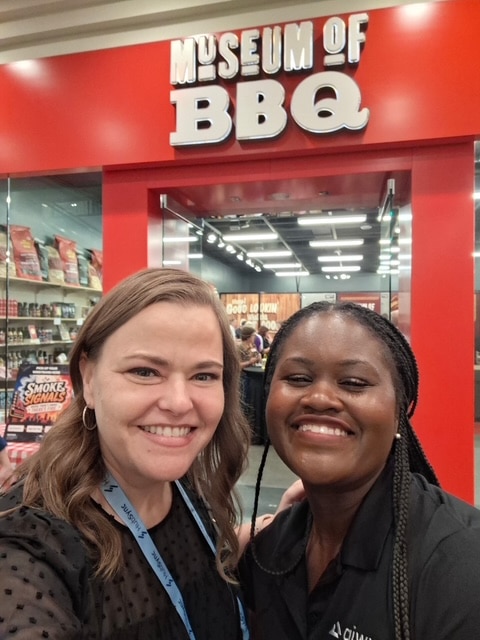
The best night of the week was Smoke Signals at the Museum of BBQ, co-sponsored with Inflo and Aiwyn, with Remitian sponsoring a brisket carving station. Nearly 100 attendees traded the usual sit-down dinner for a scavenger hunt, signature cocktails, whiskey tastings and a make-your-own spice rub station. Between that and the many other festivities throughout the show, we ate more barbecue in four days than most people eat in a year. If anyone’s looking to invest in Tums, now’s the time.


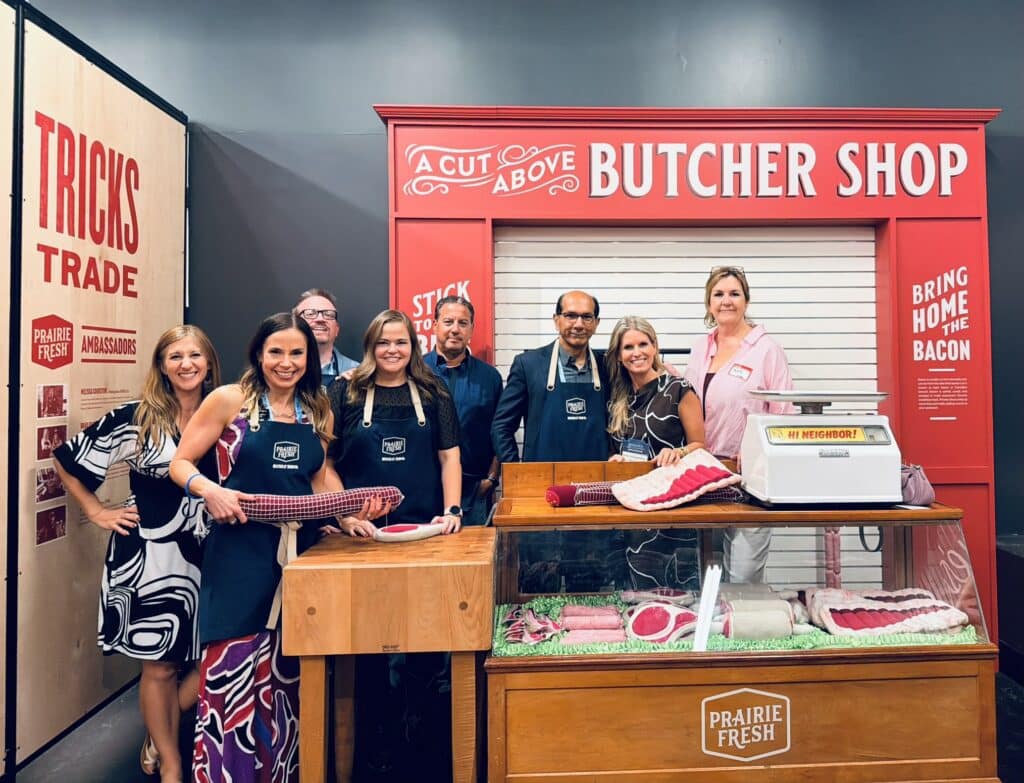
But, as anyone who’s been to Boomer Circle Summit knows, it’s never really about the parties or the swag. It’s about the sessions and conversations that stick with you and what you learn from other firm leaders in the room. So, here’s the meat of it, courtesy of Kate Krupey, VP of our CPA Practice, Sumeet Sabharwal, our CEO, and the rest of us.
The Big Conversation: AI Is Everywhere, but the Real Work Is Just Starting
1. Most firms are still experimenting
ChatGPT, Copilot, Claude and other accounting-specific tools are already showing up across firms. The harder challenge is moving from individual productivity gains to repeatable, firmwide use cases.
Thomson Reuters recently found that 74% of professionals across legal, tax, audit and accounting are using AI weekly, yet 91% believe their organizations aren’t capturing its full potential.
Sumeet pointed out that even at firms further along than most, the gap between individual experimentation and firmwide execution is still wide.
The firms making progress are starting with actual business problems: where they’re spending too much time, where work is getting stuck and what could be redesigned if AI were part of the process from the start.
2. AI governance is becoming a quality management issue
Governance often starts with security and compliance: approved tools, acceptable use policies, client confidentiality and data protection. All of that matters, but CPA firms need to think beyond it.
Recent research puts a number on the gap: 78% of leaders aren’t confident their organization could pass an independent AI governance audit, and 69% of organizations suspect or have evidence that employees are already using unapproved AI tools.
As AI starts contributing to research, workpapers, tax analysis, audit procedures and advisory deliverables, firms need visibility into where AI is being used to produce professional work, and they need to fold those AI-enabled workflows into their existing quality management and monitoring procedures.
Kate pointed out that this is particularly relevant as firms implement the AICPA’s new risk-based system of quality management. An AI policy sitting on the intranet isn’t enough on its own. Over time, AI governance becomes part of a firm’s overall quality management system rather than a separate track next to it.
Firms should be asking: Who reviewed the output? What sources and data did the AI rely on? Were the appropriate controls followed? Can the firm stand behind the resulting work?
3. Human in the loop is becoming human in the lead
AI can increasingly handle research, synthesis, document analysis and first drafts. Professional judgment, skepticism and accountability still sit with the person delivering the work.
That makes trust more important, not less. Clients will assume their CPA firm uses AI. What they’ll care about is whether the firm uses it responsibly and can stand behind the work.
4. Workflow and data matter more than another AI tool
One point came up repeatedly this year: AI doesn’t fix a bad process or bad data.
Someone still has to own the workflow, understand the inputs, clean and normalize the underlying data and define what a good outcome looks like.
For firm leaders, that means spending less time asking which AI tool to buy and more time identifying which workflows are worth rebuilding first.
5. This is ultimately a growth and talent issue
AI changes the capacity equation. It changes what junior professionals do, how they learn and where experienced professionals spend their time.
The team heard this repeatedly in conversations with firm leaders throughout the week: done well, AI also frees up capacity that firms can redirect toward advisory work and deeper client relationships.
That may explain why the AICPA’s 2026 CPA Firm Top Issues Survey ranked managing change driven by technology and AI as the top long-term issue across firms of every size.
Where This Leaves Firm Leaders
We left Kansas City with a renewed appreciation for the local barbecue and the life-saving power of acid reducers, and a lockbox worth bringing back again next year.
If there’s one thing worth carrying out of Kansas City, it’s this: the technology is basically fine. What’s still messy is everything wrapped around it, the workflow, the governance, the trust. That’s the real work now.
Thanks to everyone who stopped by the booth, traded notes over brisket, or let us in on what’s actually keeping them up at night. We’ll see you at the next one.